Search This Blog

Showing posts with label MiniRad-D. Show all posts

Monday, August 29, 2011

D-tect Systems Featured on KSL News!

Check out this great article that KSL News published over the weekend! It talks about local homeland security companies and reports on our recent trips to Japan and has some great information and photos of D-tect products in the field.

____________________________________________________________________________
D-tect Systems is a supplier of advanced radiation and chemical detection equipment sold around the world. www.dtectsystems.com.
  

Monday, July 18, 2011

Relative Doses of Radiation

As we've discussed earlier on this blog, to truly understand the health threat that radiation poses we have to put radiation in perspective. To help with this, we've just released a page that lists a number of relative doses of radiation and how they compare to the alarm levels of the MiniRad-D radiation detector. When it detects radiation, the MiniRad-D displays a number from 1 to 9 to indicate the strength of the radiation. The ranges of these numbers are listed on the graph and compared with varying radiation doses.

Because the MiniRad-D is a very sensitive device, lower levels of radiation that it picks up pose almost no health threat at all.
D-tect Systems is supplier of advanced radiation and chemical detection equipment sold around the world. www.dtectsystems.com.

Wednesday, June 29, 2011

Immersed in a Sea of Radiation

You don’t have to look far to find radiation in the world around us. In fact, the vast majority of radiation that we are exposed to throughout our lives comes from natural sources. Naturally Occurring Radioactive Materials (NORM) are very common in the environment and can be found in many products in our homes and cars. These materials generally pose very little, if any threat to our health, and it may surprise you how many everyday items have radioactive properties.

This rock from southern Utah contains Thorium-232.
The most common NORM contain radioactive isotopes of uranium, thorium, and potassium, as well as the isotopes these decay into (such as radium and radon). Although  much of the earth’s surface contains very low concentrations of radioactive materials, NORM is concentrated in many raw industrial products and activities such as the following:
Coal: although other rocks in the earth’s crust have approximately the same concentration of NORM, the large quantities of coal needed to fuel much of the world’s energy demands are responsible for a sizable amount of radiation and a wide variety of isotopes including potassium, lead, and radium. An interesting fact about NORM in coal is that the naturally occurring uranium contained in coal could be a fuel source more powerful than the coal itself if used in a certain type of nuclear reactor1
Phosphate Rock: mainly used for fertilizers, phosphates can have much more concentrated amounts of NORM than other mining products. The radioactive content of phosphates has attracted media attention after European fertilizer manufacturing had been found responsible for radioactive material in the Atlantic.
Granite: this type of stone has traces of uranium in it, which means that many federal buildings such as the United States Capitol are faintly radioactive. We’ve found that the MiniRad-D (a small radiation detector) reads a constant radiation level of 2 around the perimeter of the Utah State Capitol, which has a granite facing on its exterior. Radiation measurements on granite surfaces can even show comparable levels to those from low-grade uranium mine tailings.
Oil and gas production: most of the radioactive material brought out of the ground in oil and gas production is deposited in pipes and other equipment. The concentration of NORM has made the resale of used equipment more difficult in recent years.
Although industrial activities are responsible for large amounts of NORM, many common household items also have significant amounts of radiation. Here are a few examples:
Smoke detectors: one of the most radioactive items in a home is the smoke detector, which uses an isotope of americium to sense the presence of airborne particles carried by smoke.
A small Americium-241 pellet from a smoke detector is contained in the plastic holder on top of the MiniRad-D device.

Ceramics: some of the most famous antique radioactive items are Fiesta Ware ceramics, which were produced from 1936-19432. The red glaze on these dishes contains Potassium-40, as do  the glazes of other ceramics with red, yellow, green, and black colors. The clay itself used in some ceramics can also contain NORM. Ceramic products such as bathroom tiles and porcelain can also show up on a radiation detector.
Cat litter: the main ingredient of cat litter is clay, which like that used in ceramics, often contains low levels of NORM.
Colored glass: uranium was commonly used as a coloring agent in yellow and green glass produced in the first half of the 20th century. You can find antique dinnerware, home décor, and even children’s marbles that emit a measurable amount of radiation.
These antique marbles contain trace amounts of uranium.

Glossy paper: Kaolin, a substance known as “white gold” for its versatility and value, was commonly used to create glossy paper on magazines in the early 1900s. Kaolin contains clay with low concentrations of uranium and thorium.
Instrument dials: due to its ability to fluoresce, radium was used in paint for marking instruments and watch dials. This paint exhibits a bright green color when fluorescing.
Spark plugs: dating back to 1940, some old spark plugs contain an isotope of polonium that was used to make a more brittle alloy that readily creates sparks.

Lantern Mantles: old Coleman lantern mantles contain low levels of Thorium-232, an isotope with a 14 billion year half-life. Special care should be used when dealing with used mantles to ensure the radioactive dust isn’t breathed in.
A Coleman lantern mantle with a MiniRad-D detector.

Food: many foods contain trace amounts of radiation, including potatoes, bananas, kidney beans, and Brazil nuts. Salt substitute, which contains potassium chloride instead of sodium chloride, may also have a low level of radiation due to the presence of Potassium-40.

1) http://www.world-nuclear.org/info/inf30.html

2) http://www.orau.org/ptp/collection/consumer%20products/consumer.htm


D-tect Systems is supplier of advanced radiation and chemical detection equipment sold around the world. www.dtectsystems.com.

Tuesday, May 24, 2011

Radioactive Fossils!

Last week one of our engineers took a trip down to Moab, Utah which is about a 4 hour drive south from our facility. For those of you who have never visited southern Utah, Moab is a world-famous mountain biking destination. It’s also known for dinosaur bones – the bright red sandstone in the area has produced some amazing ancient remains. While checking out one of the shops in town, our engineer noticed that the MiniRad-D (a portable radiation detector) he brought with him alarmed when he passed a row of fossils. I was surprised to find that this isn’t an anomaly: fossils often have radiation levels much higher than the environment around them. Robert Bekker, a world famous paleontologist, referred to this phenomenon when he said "you wouldn't want to leave some bone fragments in your pocket all day long."

An enthusiast checks the radiation levels of a dinosaur bone near Denver (source).

So why are fossils so ‘hot’? The reasons for this are not completely known, but one possible reason is that naturally-occurring radiation tends to concentrate in the living tissue of plants and animals. This is especially true with ocean-dwelling creatures such as shellfish and snails. Particles containing  isotopes such as U-238 and Th-232 and other isotopes often coalesce on the seafloor where the living organisms are exposed to them. Over long periods of time, the collected isotopes decay into other radioactive isotopes, making even small concentrations stand out. Also, In a process known as permineralization, living materials are replaced at times by deposits of denser materials with greater concentrations of radioactive isotopes.

These concentrations are usually fairly low, however, and it’s easy to see why people miss them. There’s often no visual difference between a rock containing a fossil and other ancient rocks. And because Geiger counters respond slowly to radiation, they would be ineffective at finding radiation at such low levels unless the operator knows what they are looking for. Scintillation detectors like the Cesium Iodide crystal used in the MiniRad-D will have a much better chance of finding these materials because they react quickly to radiation and can be up to 100 times more sensitive to radiation.

Also found in southern Utah, this rock contains measurable levels of Th-232.

Has anyone else had luck finding fossils or bones with a radiation detector? All this talk has made me want to get out into the late-spring sunshine and go searching. Who knows how many hot dino bones are still down there?  

D-tect Systems is supplier of advanced radiation and chemical detection equipment sold around the world. www.dtectsystems.com.

Friday, May 13, 2011

My Trip to Japan

While in Japan, I was paired with a group that was sent to check on the structural integrity of several church buildings in several cities. My role was to show them how to use the equipment and gauge the levels of radiation at each site. To check on these levels I went armed with two different radiation detectors: the MiniRad-D (a small, pager-sized detector) and the Rad-ID (a portable radiation identifier).

In my visits to cities from Tokyo to Iwaki I checked radiation levels and talked with the local church officials about what those levels meant. Radiation levels in downtown Tokyo were near natural background levels but the closer I got to Fukushima, the higher the radiation levels rose. The cities I visited showed readings of anywhere from 0.35 µSv/hr to 2 µSv/hr above background radiation, which are elevated levels, but definitely not dangerous. Using the Rad-ID, I found out that most of the radiation came from the radioactive isotopes Co-60, I-131, I-132, and Cs-137, which are commonly given off in nuclear processes.


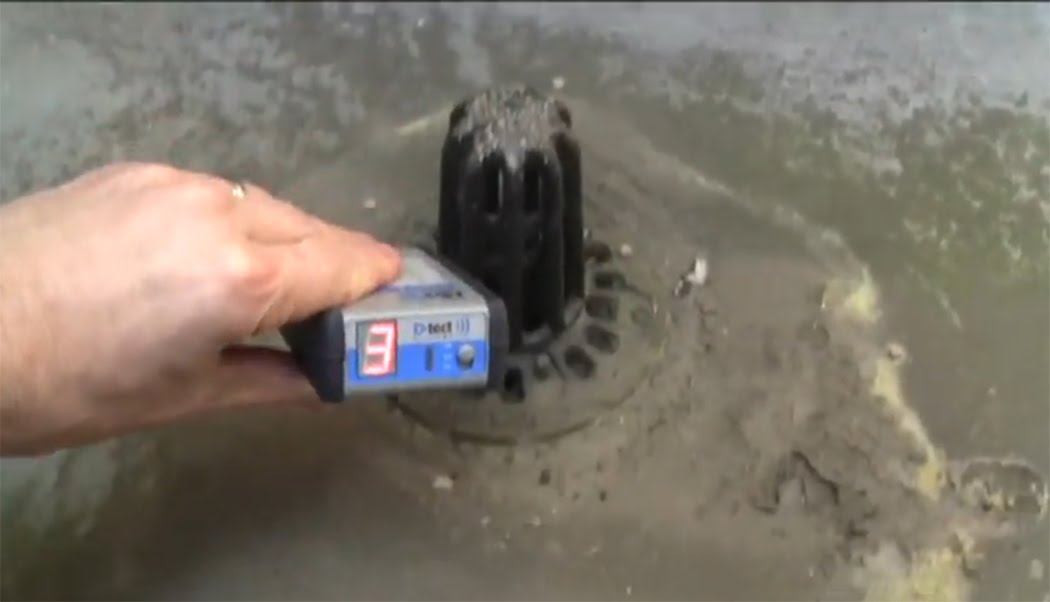
An interesting observation that I made was that storm drains in the areas I visited showed higher levels of radiation than the surrounding areas. I surmised that rainfall had carried down and collected some of the radioactive dust in the air and deposited the contamination as it flowed down these drains.


Although the Japanese have shown amazing resilience and are working as hard as they can to solve these enormous problems, there is still much uncertainty about health risks and what the future will bring. We’ll be back soon to check on the radiation levels again. If you’d like to brush up on your radiation basics, you can check out this sheet we’ve complied. It has basic conversions, safety levels, and doses to put radiation exposure in perspective. An interesting chart on radiation dose rates can be found here.

Wednesday, May 4, 2011

Radiation Contamination in Food and Water: What's the Risk?

As Japanese emergency workers continue to pump out thousands of gallons of contaminated water from the damaged reactors of the Fukushima Power Plant, radiation contamination in food and water has emerged as a new focus of the international media.  

Before explaining the risks of food and water contamination, it’s important to understand the difference between radiation exposure and radiation contamination.  The United States Center for Disease Control (CDC) defines exposure and contamination with the following:

A person exposed to radiation is not necessarily contaminated with radioactive material. A person who has been exposed to radiation has had radioactive waves or particles penetrate the body, like having an x-ray. For a person to be contaminated, radioactive material must be on or inside of his or her body. A contaminated person is exposed to radiation released by the radioactive material on or inside the body. An uncontaminated person can be exposed by being too close to radioactive material or a contaminated person, place, or thing.”


As the CDC implies, there are many ways that radiation can enter the body for contamination to occur.  Radioactive materials that enter into digestive tract can do damage while they reside in the body, but most of these materials pass through quickly. Radiation that gets trapped in other areas of the body, such as radioactive dust being breathed in and lodged in the lungs, can cause serious threats because the longer the radiation resides in the body, the more harm it can do.

So what are levels of radiation we actually need to worry about in food or water? The unit of measurement used for quantifying radiation in food and water is the Becquerel (Bq) and defined as the activity of a radioactive material in which one nucleus decays per second. More dangerous sources of radiation give off higher readings, and amounts decrease as radioactive isotopes decay. The Becquerel is a very small quantity of radiation; the human body itself produces over 4000 Bq per second. The standards set by the United States Food and Drug Administration (FDA) for food and water is about 375 Bq/lb (170 Bq/kg).

Recently Japan reported a reading of 463 Bq/lb (210 Bq/kg) in Tokyo’s tap water, leading to widespread fear and a government advisory against giving tap water to children (who are more susceptible to radiation and have lower exposure limits). Since this incident, the radiation in Tokyo’s tap water has returned to safe limits. Radiation in food has also been a problem, especially since much of the Fukushima Prefecture near the crippled nuclear plant is dedicated farmland.  Widespread bans have gone into place on the sale and consumption of crops from affected areas, as well as seafood caught in the ocean near the plant. Much of the radiation present in the contaminated food and water is Iodine-131, which has a half-life (meaning that half of a quantity of the material has broken down and is not longer radioactive) of only 8 days. This means that this type of radiation won’t be around for long, but the fear of radiation is more likely to hurt the Japanese economy as buyers shy away from food that they think might still have some contamination.

Source: Associated Press

Although the fear that Japanese radiation in dangerous amounts will end up in other countries is often unfounded, we can’t let down our guard just yet. Japan provides 4% of US food imports, including many seafood products that can have concentrated levels of radiation, such as shellfish and seaweed.

So how can we assure that our food and water is contamination free? Finding trace amounts of radiation in food and water is often difficult because products are usually shipped in large containers that shield radiation. Common radiation detectors such as Geiger Counters just aren’t sensitive enough to detect radiation at these levels. The FDA works to safeguard our food supply by using the MiniRad-D, a hand-held radiation detector, to search for radiation. The MiniRad-D uses a scintillation detector, which is over 100 times more sensitive than a Geiger counter, and because it can pick up radiation from tens of meters away, it can be used to scan whole containers of food at once. 

The MiniRad-D radiation detector

The procedure of scanning food is becoming increasing popular as Japan increases its exports. According to a recent New York Times article, even some fish markets and high-end restaurants have begun radiation detection procedures to ensure the safety of their customers. Knowing for sure that food and water is clean is a big draw for these businesses as Japan’s nuclear clean-up continues to make headlines.

So, although the direct danger of radiation contamination in food and water is very low, the effects of the nuclear crisis are sure to be felt for years to come. And as many companies involved with food imports are discovering, peace of mind is not only attainable, but extremely valuable. With the right equipment, good information, and correct procedures, this peace of mind is truly available to everyone.

D-tect Systems is supplier of advanced radiation and chemical detection equipment sold around the world. www.dtectsystems.com.


Monday, March 21, 2011

Radiation Exposure: What Can I Do?


Experiencing the front line of a crisis is a terrifying experience, especially in the face of uncertainty and fear of the unknown.  This point is especially well illustrated in Japan’s ongoing nuclear crisis.  For over a week now, rescue workers in Japan have dealt with floods, fires, power outages, and infrastructure damage, all compounded with the threat of an escalating nuclear crisis.  Radiation levels are at elevated levels for miles around the Fukushima Dai-ichi nuclear complex and scientists are scrambling to determine how much radiation has already been released into the environment.  In the interest of providing a little peace of mind to security personnel across the globe whose line of work brings them into contact with critical situations, we have a few basic suggestions on how to avoid radiation risks.

The way the public views radiation has been shaped by some of the most horrific incidents in modern history: Chernobyl and Hiroshima.  These extreme cases have influenced many to assume that radiation is an exotic and deadly phenomenon.  In reality, our environment is steeped in radiation that our bodies absorb without any proven ill effect.  The most important factor in understanding the impact of radiation is quantity – how high radiation levels are and how these levels translate to risk. 

Security personnel are key and assist as the first line of defense against these varying dangers of radiation.  Organization is extremely important in crisis situations, and even just a few informed individuals can drastically change the outcome of a hazardous situation.  Security personnel have to act quickly to mitigate and ascertain the amount of radiation in the environment.  Two tools that are absolutely essential to security personnel in a radiation crisis are the dosimeter and radiation detector. 

A dosimeter is a small badge worn on the body or a small handheld device used to measure how much radiation the person has been subjected to.  Security personnel are often exposed to more radiation in their line of work, and must carefully monitor their dosimeters to tell them when they are approaching risk levels and must leave the danger area.  To give some idea of safe radiation levels, natural background radiation – the radiation that we are exposed to every day from cosmic rays and naturally-occurring radioactive materials – is about 370 millirems per year in the United States.  A coast-to-coast airplane trip will expose you to about 12 millirems, and a year of watching four hours of television per day adds up to about 2 millirems.  These quantities are miniscule compared to a federal occupational limit of exposure at 5000 millirems per year. Children and pregnant women have much lower exposure levels, and very high levels of radiation can cause serious health risks in a short time. 

Radiation detectors are indispensable to security efforts because they allow personnel to find contaminated areas and people quickly.  A common detector that has been used in the past is a Geiger-Mueller detector, or a Geiger counter. A Geiger counter is a very low cost detector, typically less than $500 USD, and provides very basic detection of large levels of radiation. However, they have significant limitations in a radiation crisis including limited to no detection of lower levels of radiation that can still be dangerous, as well as slower response time. One of the best detection technologies on the market is called a scintillation detector.  These detectors, on average, are 100 times more sensitive than Geiger counter and respond more rapidly to radiation, usually within one second, and typically cost around $1,200 USD.  The much greater sensitivity of scintillation detectors is important in situations like the Japanese nuclear crisis because the heightened environmental levels of radiation in the ocean near the complex (which are 127 times normal background levels) would not even show up on a typical Geiger counter.  The information scintillation detectors gather from radiation can even be used to identify different radioactive isotopes.  Devices such as the D-tect Systems MiniRad-D (a personal handheld detector) and Rad-ID (a handheld radiation detector and identifier) and regularly used by security personnel and individuals in such situations to detect and, where necessary, identify the types of radioactive materials a person has been exposed to.

The procedures outlined by government agencies are carefully adapted to each dangerous situation and should be strictly adhered to.  These procedures aim to limit the spread of radiation and minimize risk to exposed areas.  Although the specific instructions given out for each incident vary, here are a few general guidelines that should always be followed. 

First, in case of radiation contamination, get people (including yourself) out of harm’s way as quickly as possible and notify authorities. Radiation spreads easily though blowing dust and smoke, so radiation-free secure zones must be established by sealing off areas from the outside environment by closing and weather-proofing doors and windows and placing food and water in well-insulated areas such as basements.

Second, since human skin generally acts a good barrier against low-level radiation, the biggest threat is breathing in radioactive materials or somehow ingesting them.  Make sure to wear a face mask in areas that may be contaminated and wash hands regularly.  If you suspect someone has been exposed to radioactive dust, the best solution is usually as simple as discarding contaminated clothing and washing with soap and water, as this will rid the body of radiation before it can cause damage.  As an additional guard against significant amounts of radiation, potassium iodide tablets are sometimes given to protect to the thyroid gland.

Third, preparation is vital when it comes to any kind of disaster, and we recommend everyone keep an emergency kit close at hand so that they can be personally prepared in case of any crises.  This kit should include such things as food and water for a few days, water filtration kit, emergency blanket, rain gear, batteries for radios and detectors, dust mask, extra clothing, flashlight, candles, waterproof matches, cooking utensils, necessary medications, and a first aid kit.  Although we generally take these supplies for granted, shortages can occur quickly in crisis situations.   

Although the current nuclear crisis is fraught with unanswered questions, appropriate preparation will enable you to minimize potential risks and provide you the ability to safely navigate through any crises, including potential radiation exposure.

Thursday, March 17, 2011

Japan's Nuclear Crisis


Last week one of the largest earthquakes on record shook Northern Japan and triggered a devastating tsunami.  The damage is extensive: so few roads and runways are open that even humanitarian supplies have been seriously delayed.  But the greatest fear of the country isn’t the washed out roads or flattened villages.  It’s an invisible phenomenon with huge historical significance to the Japanese: the threat of nuclear radiation is rising like a ghost recalled from the past.

Nuclear power doesn’t make many headlines these days.  Until last Friday, nuclear plants have been considered in many parts of the world to be the best economical solution to growing power needs.  Japan has 55 nuclear reactors, providing approximately a quarter of the country’s power.  Advancing nuclear technologies have made power more efficient and seemed to invalidate radiation risks illustrated so horrifically by incidents at Chernobyl and Three-Mile Island.  But it is clear that innate nuclear power risks, however diminished, remain.

Japanese security personnel at the nuclear complex.  Photo credit cnn.com.
 The setting for the nuclear showdown in Japan is the Fukushima Dai-ichi nuclear complex.  Although this reactor, as well as two others, ceased operations as soon as the magnitude 9.0 earthquake hit, consequent damage to the structure has destabilized the normal cooling operation of the plant and lead to an atomic crisis.  Three hydrogen gas explosions have already rocked the plant, providing evidence that the fuel rods are at above normal temperatures.  Japanese authorities have already announced that steam from a nuclear cooling pond (used to cool the fuel rods) has been released into the atmosphere, meaning that some radiation has already leaked from the plant.  At this point, quantities of released radiation are unknown, but could rise dramatically if cooling of the reactor core is unsuccessful or a breach in the reactor wall occurs. 

But what is the real danger of nuclear radiation?  Unlike other forms of radioactive materials, such as those used commonly in hospitals and industry, nuclear materials are very heavily controlled throughout the world, and for good reason.  Nuclear materials, such as plutonium and uranium, give off neutrons at extremely high energy levels as their nuclei decay.  This kind of radiation easily passes through most matter, but can affect body tissues enough to cause serious medical problems. Short-term nuclear exposure can cause infections, hair loss, and fevers, and in extreme cases, organ failure and death.  Long-term exposure can cause cancer, tumors, and genetic damage.  Even shielded nuclear radiation sources can emit gamma radiation, which brings other health risks. 

The nature of this nuclear crisis, as well as many related scenarios, requires the use of a combination of radiation detectors all working together to minimize risks.  Our products are designed for just this.  In case of a radiation release, a perimeter could be set up using small, handheld MiniRad-D devices.  These pager-sized radiation detectors can sense radiation from tens of meters away.  The MiniRad-D could also be used to check personnel leaving the nuclear zone to determine if decontamination is needed.

The MiniRad-D is self-calibrating and uses a high-sensitivity scintillation detection system.
 The Rad-D unit is ideal for placement in unmanned locations to monitor ambient changes to radiation levels.  The system requires no maintenance and sophisticated neutron detectors can be configured into the system as well as gamma detectors. 

At the forefront of the crisis, specialized equipment designed for finding and identifying the type of radiation is needed.  The high-energy nature of nuclear radiation tends to saturate detectors and is hard to differentiate from gamma radiation.  Special neutron detector systems, such as the Helium-3 gas-filled tubes used by D-tect Systems in both the Rad-ID and Rad-D systems, sort out gamma rays and detect and identify neutron radiation.  The Rad-ID also contains a combination of detector types to find radiation over a wide range of energies, and from large amounts of radiation to sources emitting just above background radiation.

The Rad-ID can identify over 110 radioactive isotopes.
 We hope for the best in the Japan’s current nuclear crisis and that future wise decisions will mitigate the risks involved with nuclear power.

Wednesday, October 13, 2010

D-tect Systems Warranty Extended

Draper, Utah, February 26, 2010 – D-tect Systems, a division of Visionary Products Inc. (VPI), announced today that it is expanding its warranty on the sophisticated lineup of D-tect radiation detection and identification products. These rugged devices are designed to endure harsh conditions and provide years of highly sensitive detection and identification of radioactive isotopes.

D-tect Systems announced the extension of its limited warranty to two years at no extra cost, doubling the previous warranty term. “We are confident in their durability and ability to perform in the most strenuous of conditions,” says Morgan Taylor, president of VPI.

D-tect’s line of radiation detection and identification products include the MiniRad-D, a personal handheld radiation detector; the MiniRad-V, a vehicle-mounted radiation detector; the Rad-D, a fixed position detector; and the Rad-ID, a handheld isotope identifier and detector. 

These compact devices are capable of detecting miniscule amounts of gamma and neutron radiation from medical, industrial, and military-grade materials. D-tect products are currently in used by Department of Homeland Security personnel to detect and safeguard the public from radiological threats. Other areas where these detectors are deployed include industrial, public safety, emergency response, medical, airport, and military radioactivity monitoring.

With two full years of warranty protection, Taylor expressed confidence in the abilities of the rugged D-tect product lineup. “D-tect products are designed for ruggedness, simplicity of use, and high sensitivity to radiation. This expanded two year warranty demonstrates our confidence that we have the best radiological detectors and identifiers on the market.”